

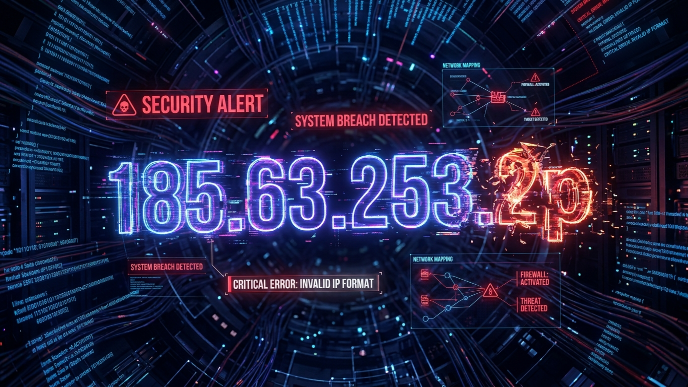
Introduction to 185.63.253.2p and Why It Appears Online
The string 185.63.253.2p looks like an IP address but immediately stands out because it includes a letter “p” at the end. Many users encounter this format in logs, error messages, or suspicious online content and search for its meaning. At first glance, it resembles a normal IPv4 address, but it does not follow valid networking rules.
In cybersecurity and networking, even small changes in formatting can completely change the meaning of data. That is why 185.63.253.2p creates confusion—it is partly valid and partly invalid at the same time. The numeric portion appears to be a real IP, but the added character makes it unusable in real network communication. This combination is often linked to logging errors, tracking labels, or malformed data entries.
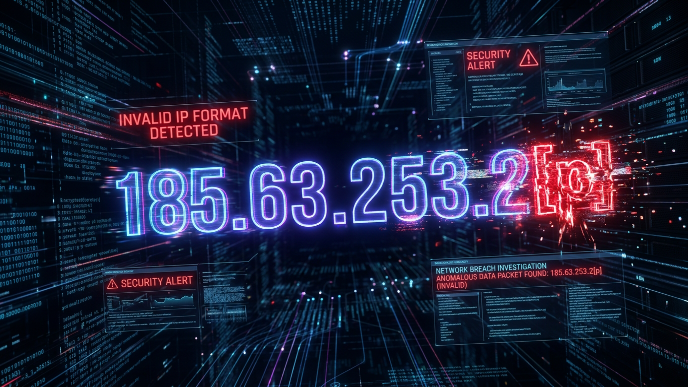
Understanding the Structure of 185.63.253.2p in Networking Terms
To understand why 185.63.253.2p is unusual, we first need to understand how IP addresses work. A standard IPv4 address consists of four numeric blocks separated by dots, and each block must be between 0 and 255. The base part of this string, 185.63.253.2, follows this rule correctly and is technically a valid IP address.
However, the addition of the letter “p” breaks the format entirely. IP protocols do not support alphabetic characters in IPv4 addresses. This means the full string 185.63.253.2p is invalid and cannot be used for routing internet traffic. Systems will reject it immediately during validation because it does not match the expected structure of a networks identifier.
What 185.63.253.2p Actually Means in Technical Terms
To understand 185.63.253.2p, it is important to separate the valid IP portion from the invalid suffix. The numeric part 185.63.253.2 is a properly formatted IPv4 address. IPv4 addresses must contain four numeric sections, each between 0 and 255, which this part satisfies.
However, the additional “p” breaks the standard format, making the full string invalid. Systems cannot route, resolve, or process an IP address that contains letters. Because of this, 185.63.253.2p cannot exist as a functional internet address. It is treated as corrupted or annotated data rather than a real network endpoint.
Why Invalid IP Formats Like 185.63.253.2p Appear in Logs
Invalid IP-like strings often appear due to software issues, logging errors, or misconfigured systems. In large networks, data is continuously processed, and even small parsing mistakes can introduce unwanted characters into logs. This is one of the most common reasons why formats like 185.63.253.2p exist.
Another reason is automated systems that attach labels or tags to IP addresses for internal tracking. These tags may be mistakenly merged with the IP itself. In some cases, bots or scripts generate malformed requests that result in unusual log entries. Cybersecurity analysts frequently encounter such anomalies while reviewing server activity.
The Role of IPv4 Rules and Why 185.63.253.2p Breaks Them
IPv4 addresses are strictly structured because they are used to route traffic across global networks. Each segment must be numeric, and any deviation from this rule makes the address invalid. This strict structure ensures that routers and servers can correctly interpret and forward data.
When a character like “p” is added, the system cannot interpret the address as a routing destination. This means 185.63.253.2p fails at the most basic validation level. According to networking standards, even a single invalid character prevents an IP from functioning in any communication process.
Could 185.63.253.2p Be Linked to Cybersecurity Activity
In cybersecurity analysis, malformed IP-like strings can sometimes indicate unusual activity. Attackers or automated bots may use modified formats to bypass filters or confuse monitoring systems. While 185.63.253.2p itself is not functional, its appearance in logs may still be worth investigating.
Security research shows that abnormal identifiers are often used in scanning behavior, probing attempts, or automated scripts that test system responses. These patterns do not always indicate direct attacks, but they can signal that a system is being analyzed by external tools or bots.
Difference Between Valid IPs and 185.63.253.2p Format
A valid IP like 185.63.253.2 is used for real network communication and can identify a server or device. It follows strict rules that ensure it can be routed across the internet. In contrast, 185.63.253.2p cannot function because it violates those rules.
Valid IP addresses are essential for DNS resolution, server hosting, and data transmission. Invalid formats like 185.63.253.2p exist only as errors, placeholders, or modified entries. Understanding this difference is crucial for IT professionals and cybersecurity analysts who deal with network data.
How Experts Analyze Strange IP-Like Entries
When professionals encounter entries like 185.63.253.2p, they first strip non-numeric characters and examine the base IP. If the numeric portion is valid, it may be checked for reputation, hosting details, or traffic patterns.
Experts also compare logs across systems to determine whether the anomaly is isolated or recurring. Repeated occurrences may suggest script errors or automated behavior. In contrast, isolated entries are often treated as harmless logging mistakes. This structured analysis helps avoid false security alerts.
Risks and Misinterpretation of 185.63.253.2p
The biggest risk associated with 185.63.253.2p is misunderstanding its meaning. Some users may mistakenly assume it is a real IP address and attempt to trace or block it incorrectly. This can lead to confusion in system analysis or troubleshooting.
Another risk is overinterpreting harmless 185.63.253.2p data as malicious. While cybersecurity awareness is important, not every unusual string indicates an attack. Proper validation helps distinguish between real threats and simple formatting errors in logs or software output.
Conclusion on 185.63.253.2p and Its Real Meaning
The string 185.63.253.2p is not a valid IP address because it violates IPv4 formatting rules by including a non-numeric character. However, its base form 185.63.253.2 is a real IP address, while the “p” suffix likely comes from logging errors, system labels, or corrupted data.
In most cases, such entries are harmless but should still be analyzed in context to rule out anomalies or unusual network behavior. Understanding how IP structures work helps users correctly interpret these patterns and avoid confusion. In cybersecurity and networking, accurate data interpretation is essential for maintaining system clarity, security, and reliability.
