

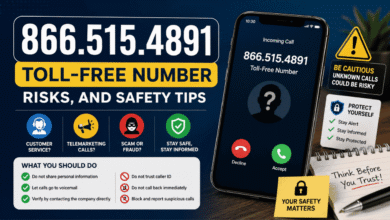
Unknown phone calls have become one of the biggest communication concerns in the modern digital world. Every day, people receive unexpected calls from unfamiliar numbers that claim to represent banks, internet providers, delivery companies, customer support teams, or government agencies. One number that has generated growing online interest is 866.515.4891. Many users search for this number after seeing missed calls, repeated call attempts, automated messages, or suspicious voicemail recordings. The increasing number of searches connected to this toll-free number shows how cautious people have become about phone scams and robocall activity.
Phone scams and spam calls have changed significantly over the last decade. Fraudsters no longer rely only on simple telemarketing tactics. Modern scam operations use advanced automation systems, caller ID spoofing technology, artificial intelligence, and psychological pressure to manipulate victims. Many scammers intentionally use toll-free numbers because they appear professional and trustworthy. Consumers often assume a toll-free number belongs to a legitimate company, which increases the chance that they will answer the call or share personal information. Numbers such as 866.515.4891 therefore create confusion because they can appear both legitimate and suspicious at the same time.
The rise of reverse phone lookup searches reflects growing public awareness about cybersecurity, identity theft, and digital privacy. Instead of automatically answering unknown calls, people now search online to identify callers before responding. Researching suspicious numbers can help users avoid scams, protect personal data, and recognize dangerous communication patterns. Understanding how toll-free numbers work, why robocalls exist, and how scammers manipulate trust is essential for staying safe in today’s communication environment.
What Is 866.515.4891?
866.515.4891 is a toll-free phone number using the 866 area code, which is part of the North American toll-free numbering system. Toll-free numbers are commonly used by businesses, customer service departments, healthcare providers, banks, retailers, and support centers because they allow consumers to call without paying long-distance charges. The company receiving the call typically covers the communication cost instead of the customer. Toll-free prefixes include 800, 833, 844, 855, 866, 877, and 888.
Many people search for 866.515.4891 because they receive repeated calls from the number or notice suspicious call behavior. Some users report silent calls, while others mention automated voice recordings or calls that disconnect after being answered. These behaviors are commonly associated with robocall systems, telemarketing campaigns, or scam operations. Although not every unknown call is dangerous, repeated unsolicited communication naturally causes concern among consumers.
Some online sources suggest that 866.515.4891 may have been associated with Verizon FiOS customer service or installation support in the past. However, several reports also warn that scammers may spoof legitimate toll-free numbers to appear trustworthy. Because toll-free numbers can change ownership over time or be imitated through caller ID spoofing, consumers should independently verify any company claiming to use this number.
Why Toll-Free Numbers Are Widely Used
Toll-free numbers have played an important role in customer communication for decades. Businesses use these numbers to provide accessible support without charging customers for calls. Banks, airlines, internet providers, insurance companies, hospitals, and online retailers all rely on toll-free communication systems to handle customer inquiries efficiently. Toll-free numbers also help businesses appear more professional and nationally accessible.
Because toll-free numbers are strongly associated with professional customer service, many consumers automatically trust them. This is one reason scammers frequently use toll-free prefixes in their fraud operations. Fraudsters understand that people are more likely to answer calls that look official or business-related. Some scam operations buy legitimate toll-free numbers, while others use spoofing systems to imitate existing numbers.
Another factor contributing to toll-free call activity is automation. Modern telemarketing systems can place thousands of calls every hour using computerized dialing software. Even legitimate marketing campaigns sometimes create frustration when consumers receive repeated calls from the same number. As a result, many toll-free numbers receive online spam complaints even when they belong to real businesses. This makes it difficult for consumers to distinguish legitimate communication from suspicious activity.
Why People Search Unknown Numbers Online
Searching unknown phone numbers online has become one of the most common consumer safety habits. People now rely heavily on reverse phone lookup tools, spam-reporting websites, and community forums to determine whether unfamiliar numbers are safe. When users search for 866.515.4891, they are usually trying to discover whether the number belongs to a legitimate company, telemarketing operation, or scam network.
Community-driven caller-reporting websites allow users to share experiences related to suspicious calls. Reports often describe robocalls, fake customer support scams, phishing attempts, insurance offers, debt collection threats, or automated messages. If many users independently report similar behavior from the same number, public suspicion increases quickly. These reports help consumers recognize dangerous patterns before becoming victims of fraud.
The popularity of reverse phone lookup services also reflects growing concerns about identity theft and digital privacy. Modern scammers frequently attempt to steal passwords, banking credentials, verification codes, or personal information through social engineering tactics. By researching numbers before responding, consumers reduce the likelihood of sharing sensitive data with unknown callers. This cautious behavior has become an important defense against phone scams and fraudulent communication.
How Robocalls and Spam Calls Work
Robocalls are automated phone calls generated using computerized dialing systems. These systems allow organizations to place thousands of calls within minutes at very low cost. Some robocalls are legitimate and used for appointment reminders, delivery notifications, emergency alerts, or customer service updates. Others are used for telemarketing or fraudulent activities designed to steal information or money from victims.
Many spam calls rely on predictive dialers and prerecorded voice systems. In some situations, the system only connects recipients to a live agent after someone answers the call. This explains why suspicious calls often begin with silence before a person starts speaking. Users reporting calls from 866.515.4891 frequently mention delayed responses, robotic voices, or calls that disconnect immediately after being answered.
Scam operations continuously evolve to avoid detection. Modern fraud networks use artificial intelligence, rotating phone numbers, and international routing systems to hide their identities. Some scammers pretend to represent banks, tax authorities, internet providers, or delivery services to create urgency and pressure victims into revealing sensitive information. These tactics make scam calls more believable and harder to identify immediately.
Understanding Caller ID Spoofing
Caller ID spoofing is one of the most important concepts consumers should understand when researching suspicious numbers. Spoofing occurs when callers deliberately manipulate the caller ID displayed on a recipient’s phone screen. Instead of showing the true origin of the call, scammers display a different number chosen specifically to appear legitimate or trustworthy.
This tactic is extremely common in phone scams because it increases the likelihood that people will answer calls. Fraudsters may spoof toll-free numbers, banks, government agencies, or local numbers to appear authentic. In many cases, the displayed number does not actually belong to the scammer placing the call. This means innocent businesses and consumers may receive complaints because their numbers were spoofed illegally.
Caller ID spoofing creates serious challenges for telecom providers and consumers alike. Even advanced spam-filtering systems cannot always identify spoofed calls immediately. Because of this, cybersecurity experts recommend independently verifying organizations through official websites or customer support channels rather than trusting incoming calls automatically. This simple habit significantly reduces the risk of fraud and identity theft.
Common Complaints Linked to 866.515.4891
Many online reports connected to 866.515.4891 describe suspicious or unwanted call behavior. Common complaints include repeated calls throughout the day, silent calls, prerecorded messages, aggressive telemarketing, and requests for sensitive information. Some users also mention calls arriving at inconvenient hours or multiple times within a short period.
Another commonly reported issue involves calls that disconnect shortly after being answered. These calls may occur when automated systems test whether a phone number is active before transferring future calls to live agents. Some robocall systems also disconnect automatically if no agent is available when the recipient answers the phone.
Although online reports can be helpful, consumers should remember that community-driven databases are not always perfectly accurate. A number may appear suspicious because it was spoofed by scammers rather than because the real owner engaged in fraud. Nevertheless, when large numbers of users independently describe similar suspicious experiences, it is wise to remain cautious and avoid sharing personal information.
Warning Signs of a Potential Scam Call
Consumers researching 866.515.4891 are usually concerned about whether the number could be linked to fraudulent activity. While not every unfamiliar call is dangerous, several warning signs commonly appear in scam-related communication. One major red flag is urgency. Scammers often pressure victims by claiming immediate action is required to avoid account suspension, legal penalties, or financial loss.
Another common scam tactic involves impersonation. Fraudsters frequently pretend to represent banks, internet providers, insurance companies, government agencies, or technical support departments. Their goal is to gain trust quickly before requesting confidential information. Many scam callers use professional language and scripted conversations that sound convincing to unsuspecting victims.
Requests for sensitive information should always raise suspicion. Legitimate businesses rarely ask customers to reveal passwords, verification codes, Social Security numbers, or complete banking details during unsolicited calls. Scam callers may also request payment through gift cards, cryptocurrency, or wire transfers because these payment methods are difficult to reverse once completed. Recognizing these warning signs can help consumers avoid becoming victims of fraud.
What To Do If You Receive a Call From 866.515.4891
If you receive a call from 866.515.4891, the safest approach is to remain calm and avoid making rushed decisions. If the caller claims to represent a company you recognize, end the conversation and contact the organization directly using the official phone number listed on its website or official documents. Independent verification is one of the most effective ways to prevent scams.
Consumers should never share passwords, account credentials, banking details, or one-time verification codes during unexpected calls. Even if the caller sounds professional and convincing, it is important to confirm their identity through trusted channels. Many successful scams rely on creating fear, urgency, or confusion that causes victims to react emotionally.
Most smartphones now include spam-filtering features that can automatically identify suspicious calls. Users can also block unwanted numbers, report suspicious activity to mobile carriers, and contribute reports to community-driven phone lookup platforms. These actions help improve public awareness and reduce the effectiveness of robocall campaigns over time.
How Telecom Companies Are Fighting Robocalls
Telecommunications providers and regulators have introduced new technologies designed to reduce spam calls and caller ID spoofing. One major development is the STIR/SHAKEN authentication framework, which helps verify whether caller ID information has been authenticated by the originating carrier. This system was created to improve trust in phone communication and reduce spoofing activity.
Mobile carriers also use artificial intelligence and machine learning systems to identify suspicious calling patterns. Many smartphones now display warnings such as “Spam Risk” or “Suspected Scam” when incoming calls match known scam behavior. These tools have improved significantly in recent years and help consumers avoid many dangerous calls before answering.
Despite these improvements, scammers continue adapting their methods to bypass modern defenses. Fraud operations frequently switch numbers, use international routing systems, and rely on temporary communication infrastructure to avoid detection. Experts therefore believe consumer awareness remains one of the strongest defenses against robocalls, identity theft, and phone fraud.
Conclusion
The growing number of searches related to 866.515.4891 reflects a broader public concern about robocalls, spam calls, and digital fraud. Consumers today understand that unknown phone numbers may pose privacy and financial risks, especially when callers use pressure tactics or request confidential information. While toll-free numbers are commonly used by legitimate businesses, scammers also exploit them because they appear professional and trustworthy.
Understanding how robocalls work, how caller ID spoofing operates, and how scammers manipulate urgency can help consumers make safer decisions. Numbers linked to repeated unsolicited calls naturally generate suspicion, particularly when users report silent calls, automated recordings, or aggressive requests for personal data. Researching unfamiliar numbers online has therefore become an important habit for digital safety and fraud prevention.
